
Description
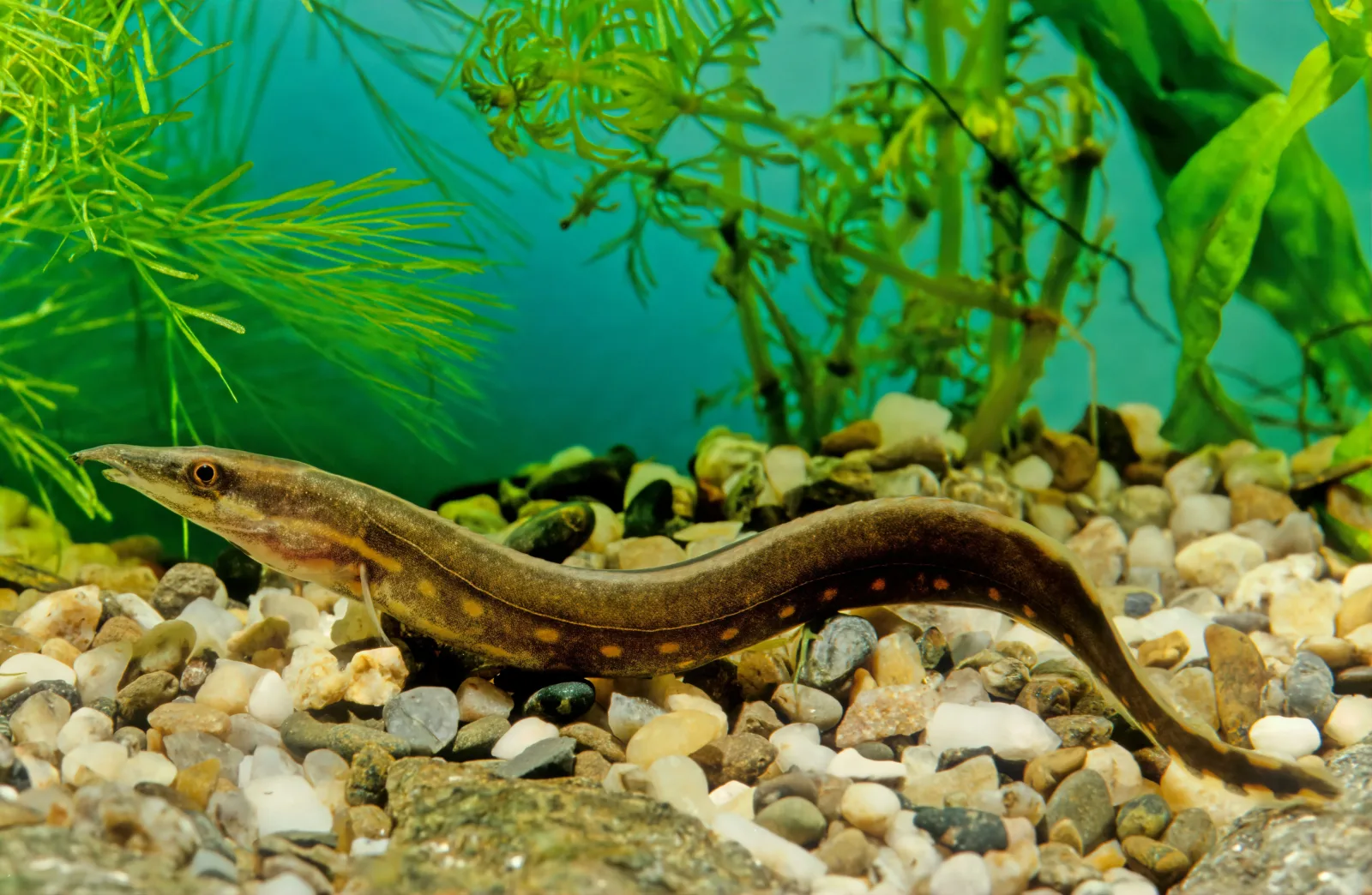
Bring home one of the most fascinating oddball fish in the freshwater hobby, the Fire Eel (Mastacembelus erythrotaenia). Known for its striking red lateral stripes and snake-like body, this nocturnal beauty hails from the sluggish, plant-rich rivers and floodplains of Southeast Asia. Despite its name, the Fire Eel is not an eel but a spiny eel, part of the Mastacembelidae family, and is admired for its intelligence, behavior, and unique appearance.
This species is ideal for experienced aquarists looking to create a large, well-decorated, and dimly lit aquarium with powerful filtration and specialized care.
At our Splashy Fish tropical fish store, our Fire Eel for sale and other freshwater fish for sale are carefully selected and packed with love! Visit us to buy them online or at our aquarium store in Virginia for more betta fish for sale, freshwater shrimp for sale, live aquatic plants for sale, and aquarium supplies.
Key Features:
Stunning Appearance: Long, dark body with bold red-orange lateral stripes
Large & Impressive: Can grow up to 39 inches (100 cm) in length
Nocturnal Behavior: Hides during the day, active and entertaining at night
Burrowing Nature: Loves soft sand substrate for digging and wallowing
Territorial Intelligence: Recognizes keepers and displays individual behavior
Tank & Water Requirements
Tank Size: 125+ gallons for adults
Temperature: 75°F – 82°F (24°C – 28°C)
pH Level: 6.0 – 7.5
Water Hardness: Up to 18 dGH
Lighting: Dim or diffused via plants and decor
Substrate: Soft sand with leaf litter or Indian Almond Leaves
Ensure a tight-fitting lid because Fire Eels are notorious escape artists. Block gaps with sponge or secure covers.
Tank Setup Suggestions
Soft sand base for burrowing
PVC pipes, caves, smooth rocks, and driftwood for hiding
Floating plants to diffuse light
Blue moonlight for nighttime viewing
Stable decor: larger Fire Eels may dislodge weak structures
Diet & Feeding
Fire Eels are carnivorous and prefer a varied diet of frozen or live meaty foods.
Staple Foods: Bloodworms, white mosquito larvae, brine shrimp
Larger Treats: Mysis shrimp, chopped krill, prawns, lancefish
Note: Dried foods are usually ignored; feed frozen for best health
Feeding Tip: Feed at dusk or under dim lighting to align with natural activity
Tank Mates & Compatibility
Best Kept With: Peaceful, medium to large tankmates (e.g., Geophagus, Severums, Knifefish, large Gouramis, peaceful Loaches)
Avoid: Small fish (may be eaten) and aggressive or overly territorial species
Intraspecies: Best kept singly unless in a very large group (5+) in a massive, well-decorated tank
Breeding (Rare in Captivity)
Successfully bred only in very large aquariums
Breeding pairs are usually 20+ inches long
Spawning occurs in dense vegetation with 800–1200 eggs
Fry require pristine water and minuscule live foods
Still considered a rare achievement among hobbyists
Fire Eel Frequently Asked Questions (FAQs)
Is Fire Eel aggressive?
Fire Eels are generally peaceful, but they can become predatory toward smaller fish, especially at night. While not overtly aggressive, they should be kept with similar-sized or larger, non-aggressive tank mates to avoid accidental predation.
Are Fire Eels rare?
Fire Eels are not considered rare overall, but their populations have declined locally in regions like Cambodia and Thailand due to overfishing. They are still commonly available in the aquarium trade, though large, healthy specimens may be harder to find.
How big of a tank do you need for a Fire Eel?
Fire Eels require a minimum tank size of 75 gallons, but a 120-gallon aquarium or larger is recommended for adult specimens. These fish grow quite large and need plenty of space to swim and hide, so a long, spacious tank with a secure lid is ideal.