

Description
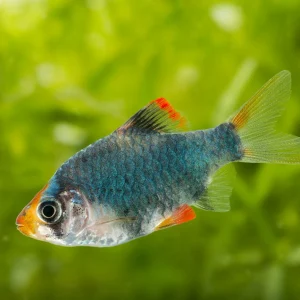
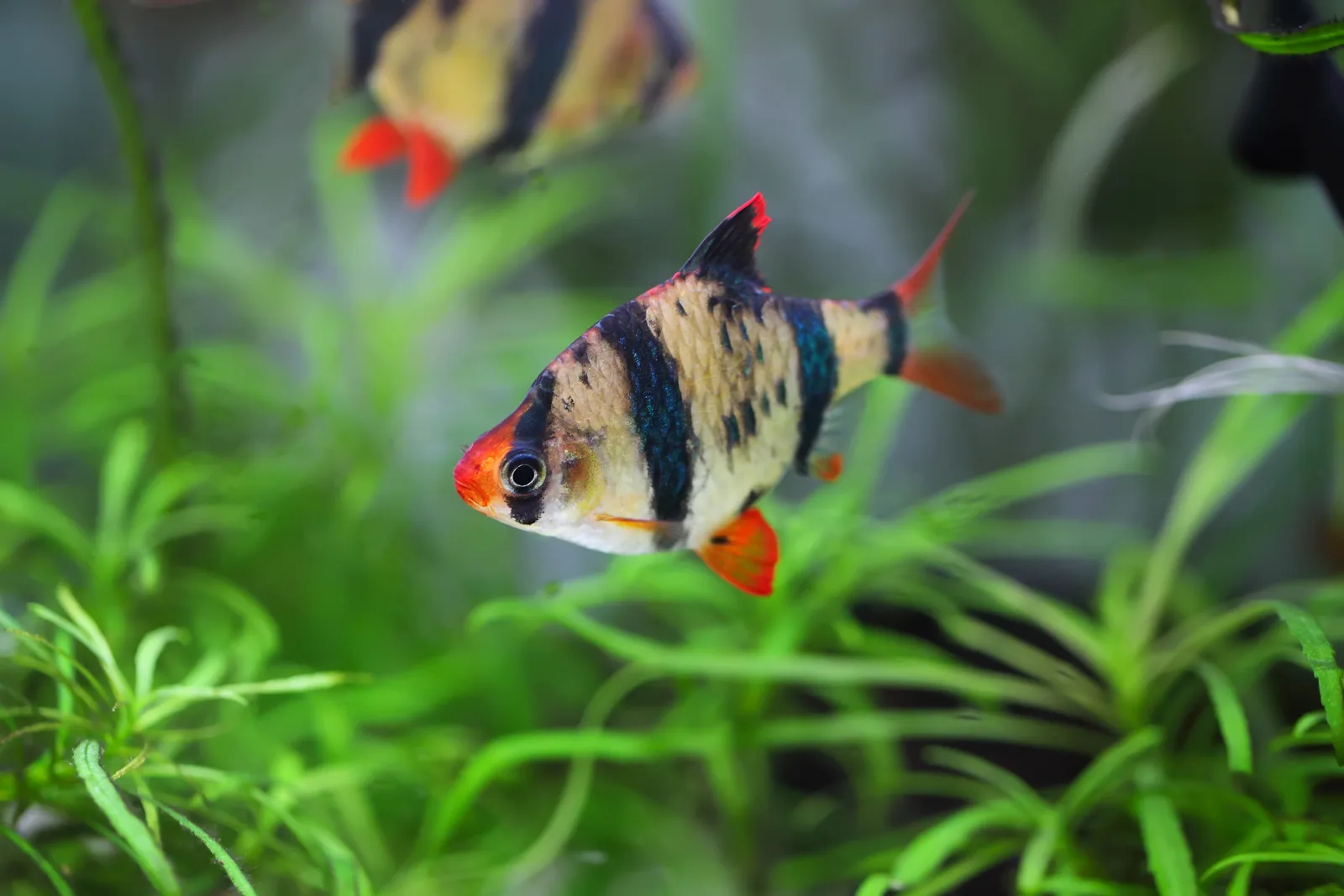
The Tiger Barb, one of the most recognizable freshwater fish in the world, is prized for its bold stripes, high energy, and lively schooling behavior. With their striking black vertical bands, bright orange fins, and constant activity, Tiger Barbs add movement and excitement to any aquarium.
Native to the streams and floodplains of Southeast Asia, the Tiger Barb (Puntigrus tetrazona) is a classic schooling species known for its playful, social nature. Their iconic “tiger-stripe” pattern and vibrant colors make them one of the most popular Barb fish in the aquarium hobby.
A full-grown Tiger Barb reaches about 2.5–3 inches (6–7.5 cm). Their bodies are golden-yellow with four bold black stripes resembling a tiger’s pattern. Males typically display deeper red coloration on their fins and noses, especially during breeding or in well-established tanks. Their compact size and bright colors make them ideal for aquariums of all styles, from heavily planted aquascapes to simple community setups.
Tiger Barbs are active, semi-aggressive schooling fish. When kept in proper groups of 6–10 or more, their fin-nipping tendencies dramatically decrease because they focus their energy within the school.
The ideal Tiger Barb tank includes plenty of swimming space, moderate water flow, and hardy plants or decorations for cover. Good tiger barb tank mates include: Other barbs (Cherry barbs, Rosy barbs), Giant danios, Rainbowfish, YoYo loaches, Corydoras, and Larger tetras. Avoid slow, long-finned fish such as Bettas, Angelfish, or Guppies.
At Splashy Fish tropical fish store, our Tiger Barbs for sale and other Barb fish for sale are tank-bred, grown, and sold with love and care. Visit our fish store online or aquarium in Virginia for more high-quality freshwater fish for sale, such as betta fish for sale, aquatic plants for sale, freshwater shrimp for sale, and other aquarium supplies.
WHAT YOU CAN EXPECT FROM THIS FISH:
Iconic striped appearance with bright orange fins
Extremely active schooling fish
Hardy and beginner-friendly
Grows to 3 inches, which is perfect for mid-sized tanks
Best kept in large groups to reduce aggression
Adds constant movement and visual excitement
RECOMMENDED TANK PARAMETERS:
Tiger Barb Tank Size: Minimum 30 gallons for a proper school
Temperature: 74°–80°F (23°–27°C)
pH: 6.5–7.5
Hardness: 5–15 dGH
Filtration: Moderate to strong flow with excellent oxygenation
Tiger Barbs Care Guidelines
Diet: Omnivorous. Feed high-quality flakes, sinking pellets, and frozen foods like brine shrimp, bloodworms, and daphnia. A varied diet enhances color and energy levels.
Tank Setup: Provide open swimming space, hardy plants, rocks, and driftwood. Bright lighting brings out their bold coloration.
Behavior: Active, playful, and semi-aggressive if kept in small numbers. Best schooling behavior appears in groups of 8–12.
Tiger Barb Frequently Asked Questions (FAQs)
How do Tiger Barb lay eggs?
Tiger Barbs are egg-scattering fish, meaning they lay eggs freely throughout the aquarium rather than using a nest. During breeding, the male Tiger Barb chases the female, prompting her to release tiny transparent eggs over plants, rocks, or gravel. The male then fertilizes the eggs externally. Since Tiger Barb fish often eat their own eggs, a separate breeding tank with a mesh or marbles is recommended to protect the eggs until they hatch in about 36–48 hours.
Can Tiger Barb live with Goldfish?
It’s generally not recommended to keep Tiger Barbs with Goldfish. Tiger Barbs are active, warm-water tropical fish that prefer 74°–80°F, while Goldfish thrive in cooler water. Additionally, Tiger Barbs are known for fin-nipping, especially toward slow, long-finned species like fancy Goldfish. Keeping the two together can cause stress, injury, and health issues, so they are best housed in separate tanks.
Are Tiger Barb schooling fish?
Yes, Tiger Barbs are true schooling fish and should always be kept in groups of 6–10 or more. Schooling reduces aggression, encourages natural behavior, and helps prevent fin-nipping. When kept in proper numbers, Tiger Barbs display coordinated swimming, brighter coloration, and a calmer temperament, making them a lively and enjoyable addition to community aquariums.